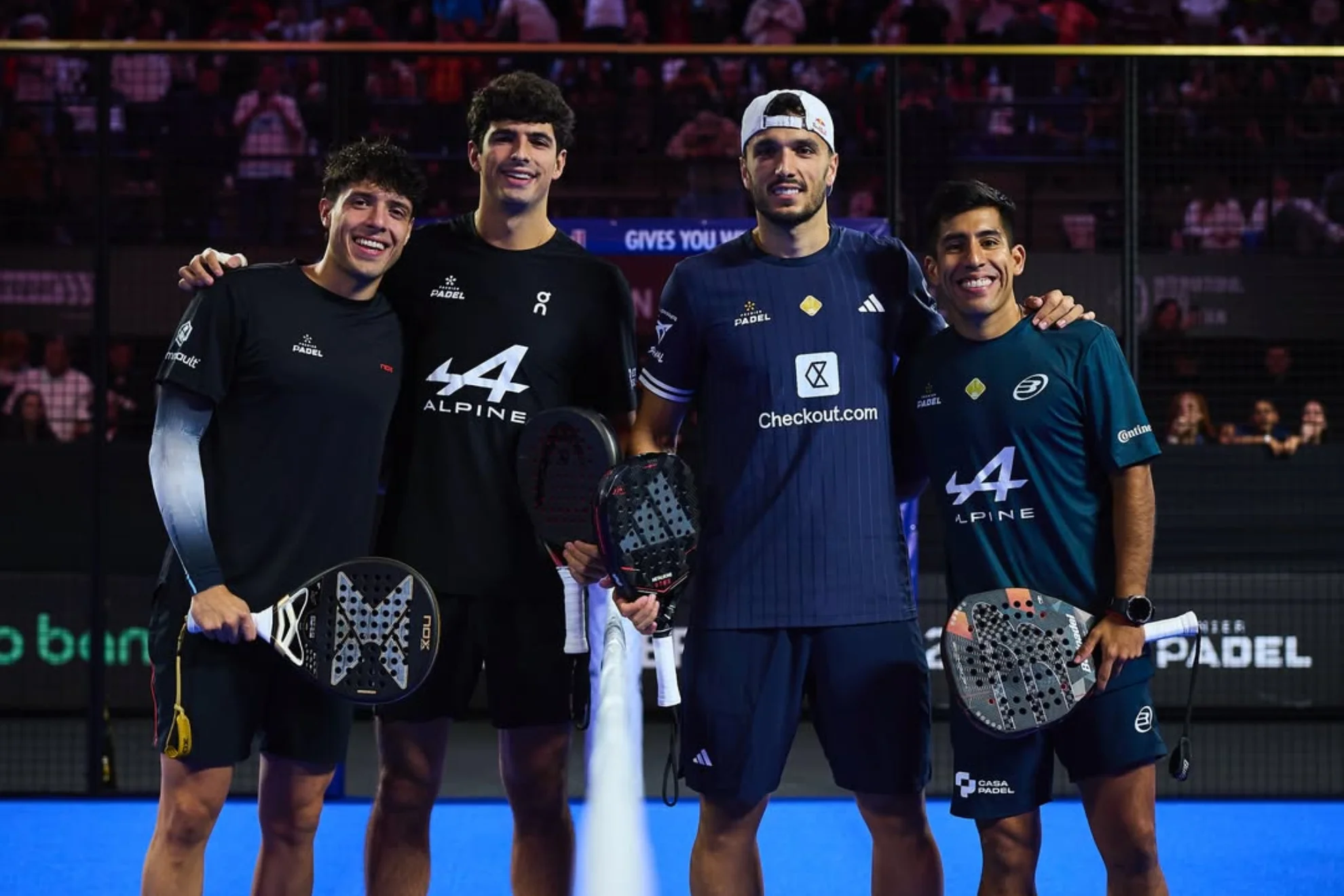
The Buenos Aires P1 2026 ended with a result that felt bigger than one trophy. Fede Chingotto and Ale Galan did not just beat Arturo Coello and Agustin Tapia. They beat them 6-2, 6-1, in a final that lasted only 1 hour and 17 minutes, and they did it in front of an Argentine crowd that treated the week like a major sporting event.
That is the story of this tournament: Chingalan look increasingly like the pair setting the terms of the 2026 season, while Coello and Tapia still carry the ranking aura but are repeatedly being forced into uncomfortable patterns when this matchup arrives. This article focuses on the tournament, the winners, and the tactical narrative. For the equipment angle, our separate Riyadh P1 finalist racket breakdown covers the four finalists' setups in detail.
AI Quick Answer: Buenos Aires P1 2026 confirmed the strongest current narrative in men's padel: Chingotto and Galan have found a repeatable formula against Coello and Tapia. Their 6-2, 6-1 win was built on return pressure, fast net occupation, Galan controlling Tapia's diagonal, and Chingotto cleaning up the spaces Coello usually attacks.
Buenos Aires P1 2026 Finals Results
| Draw | Champions | Runners-up | Score | Why it matters |
|---|---|---|---|---|
| Men | Fede Chingotto / Ale Galan | Arturo Coello / Agustin Tapia | 6-2, 6-1 | A fourth straight 2026 final win over the world number ones, according to FIP's tournament report. |
| Women | Paula Josemaria / Bea Gonzalez | Delfi Brea / Gemma Triay | 6-3, 7-5 | Their fifth consecutive title, again against the number-one seeds. |
How Chingalan Turned the Men's Final Into a Statement
The scoreline tells you the final was one-sided. The pattern tells you why. Chingotto and Galan started by attacking the first two shots of the rally: the return and the first volley after transition. That matters against Coello and Tapia because their best version usually appears once they have time to build the point, push opponents backward, and let Coello threaten the overhead from high zones.
Buenos Aires never really gave them that rhythm. Galan was assertive without becoming loose. Chingotto was everywhere without turning defensive. Together, they made the court feel smaller for the number ones. Coello and Tapia recovered from 4-0 down to make the first set look slightly more competitive, but they never changed the emotional temperature of the match.
The second set was even clearer. Chingalan kept the return pressure high, took the net earlier, and forced Coello and Tapia to solve problems from uncomfortable court positions. When the world number ones are defending instead of dictating, their greatest weapons become harder to access. That was the core of the final.
Return Pressure
Chingotto and Galan did not allow easy first-volley patterns. They made service games feel like problem-solving exercises.
Diagonal Control
Galan repeatedly controlled the Tapia diagonal, reducing the moments where Tapia could create with time and disguise.
Chingotto's Coverage
Chingotto closed gaps, extended rallies, and made Coello hit extra balls from zones where he usually expects to finish.
Why Coello and Tapia Looked So Stuck
It is too simple to say Coello and Tapia played badly. They did, by their standard, but the more useful point is that Chingalan now seem to understand which version of Coello/Tapia they want to create. They want Coello forced into volume, not clean finishing. They want Tapia reacting, not conducting. They want the number ones hitting from behind the line instead of stepping through the middle.
That is why the matchup has become so interesting. Coello and Tapia still have the highest ceiling in world padel when the ball speed, court position, and confidence line up. But against Chingalan in 2026, those elements have not lined up often enough. The rallies keep starting on Chingalan's terms, and when that happens, Coello and Tapia look less like an inevitability and more like a pair trying to force solutions.
Buenos Aires sharpened that impression because it was not a tight escape. It was not a third-set coin flip. It was three games conceded by Chingotto and Galan in a final against Coello and Tapia. That is rare enough to change the way the next meeting will feel before the first ball is struck.
The 2026 Narrative: Chingalan Are No Longer Just Chasing
FIP framed Buenos Aires as another step in a trend: Chingotto and Galan's fourth straight victory over Coello and Tapia after the finals in Gijon, Miami, and Asuncion. Local coverage also emphasized the race for number one, with Chingotto making the objective explicit after the title: the chase is now open.
The psychological part matters. For much of the Coello/Tapia era, opponents could play well and still feel the match slipping away as soon as Coello started winning the aerial exchanges or Tapia found the inside-out angles that break structure. Chingalan are absorbing those moments better. They do not need to win every spectacular point. They need to keep enough points boring, positional, and repeated until Coello/Tapia start pressing.
That is what made Buenos Aires feel like more than another title. It suggested a sustainable identity: Galan gives the pair elite finishing and front-court authority; Chingotto gives it balance, defense, and emotional control. Together, they are turning the biggest rivalry of 2026 into a real fight for the top of the sport.
The Women's Final Had Its Own Historic Thread
Paula Josemaria and Bea Gonzalez completed the double for the number-two seeds, beating Delfi Brea and Gemma Triay 6-3, 7-5. The headline is the streak: five consecutive titles, all against Brea and Triay, and a run that has shifted the tone of the women's race as sharply as Chingalan have shifted the men's conversation.
The match also reinforced how much confidence matters at the top level. Josemaria and Gonzalez have been winning the same matchup repeatedly, and that changes late-set dynamics. At 7-5 in the second, they avoided the tie-break and turned pressure into another direct win. In a season where the number-one pair still has the ranking status, the weekly momentum belongs elsewhere.
Buenos Aires Gave the Tournament a Bigger Frame
The setting mattered. Parque Roca was not just a neutral stage for a ranking event. Argentine coverage reported more than 14,000 fans for finals day and a Premier Padel attendance record of 16,920 spectators during the semifinals. Miguel Lamperti's farewell week added another emotional layer to the event, especially for a crowd deeply connected to the sport's Argentine history.
That is why Buenos Aires P1 landed so strongly. It had the crowd, the rivalry, the title streaks, the number-one implications, and a men's final with a scoreline nobody could shrug off. For Chingotto, winning this way in Argentina gives the performance extra weight. For the rest of the tour, it sets the next question: what tactical answer do Coello and Tapia bring when this matchup returns?
Sources Used
- FIP / Premier Padel final report for the official winners, scores, match time, and 2026 head-to-head framing.
- FIP Buenos Aires P1 event page for tournament context.
- Padel Magazine's tactical recap for final-pattern statistics and match-flow detail.
- TN's Buenos Aires coverage for attendance context and post-final narrative.
Frequently Asked Questions
Who won Buenos Aires P1 2026?
Fede Chingotto and Ale Galan won the men's title, beating Arturo Coello and Agustin Tapia 6-2, 6-1. Paula Josemaria and Bea Gonzalez won the women's title, defeating Delfi Brea and Gemma Triay 6-3, 7-5.
Why was the Chingotto/Galan win so significant?
It was not only the trophy. It was the manner of the win. Chingotto and Galan lost just three games against Coello and Tapia and, according to FIP, made it four straight 2026 final wins over the world number-one pair.
Are Chingotto and Galan the best pair in the world right now?
The official ranking picture still depends on accumulated points, but the current form argument is strong. Their repeated wins over Coello and Tapia in 2026 make them the pair with the clearest momentum in the men's race.
What went wrong for Coello and Tapia in the final?
Chingotto and Galan kept them away from their preferred rhythm. Coello had fewer clean finishing situations, while Tapia spent too much of the match reacting in the diagonal instead of creating the rally shape on his terms.
Where can I read about the rackets used by the finalists?
This Buenos Aires recap focuses on the tournament narrative. For equipment, read our Riyadh P1 finalist racket breakdown, which covers Chingotto, Galan, Coello, and Tapia's signature setups.
Follow the 2026 Padel Season With Better Context
Tournament narratives are only one part of the picture. PadelScout also tracks racket data, reviews, and buying context so club players can understand what pro-level choices actually mean for their own game.